Growing a nuc in the garage
Last week a nuc in my yard was robbed out. It had already failed for other reasons, so the robbing ended an experiment rather than a colony, but it made a point I had been avoiding: in that yard, in dearth, a small colony spends the weeks when it is least able to defend itself doing nothing else.
The usual answers are an entrance reducer, a robbing screen, better timing. All three are ways of trying to win a fight the colony is not equipped for. So here is the other idea. Do not have the fight. Build the colony where the robbers are not, and put it in the yard once it can hold a door.
This is now running. The colony went in on 31 August 2026. Everything below was written before it started and has been left as it was, because a prediction rewritten afterwards is worth nothing. What has actually happened is in the updates at the end, and the central claim has already been measured and found wrong.
The build
A five frame Pro Nuc on a table in my garage, about three feet from a window, with one inch corrugated pond hose running from the box to the window and out. Two adapters, each a pair of plates that sandwich the box wall on four fasteners, so nothing depends on a plastic wall holding a thread. The plates are drawn around the opening the Pro Nuc already has, so they slot into the existing hole rather than cutting a new one. Nothing about the box is cut, drilled or modified, and the whole thing comes off again.
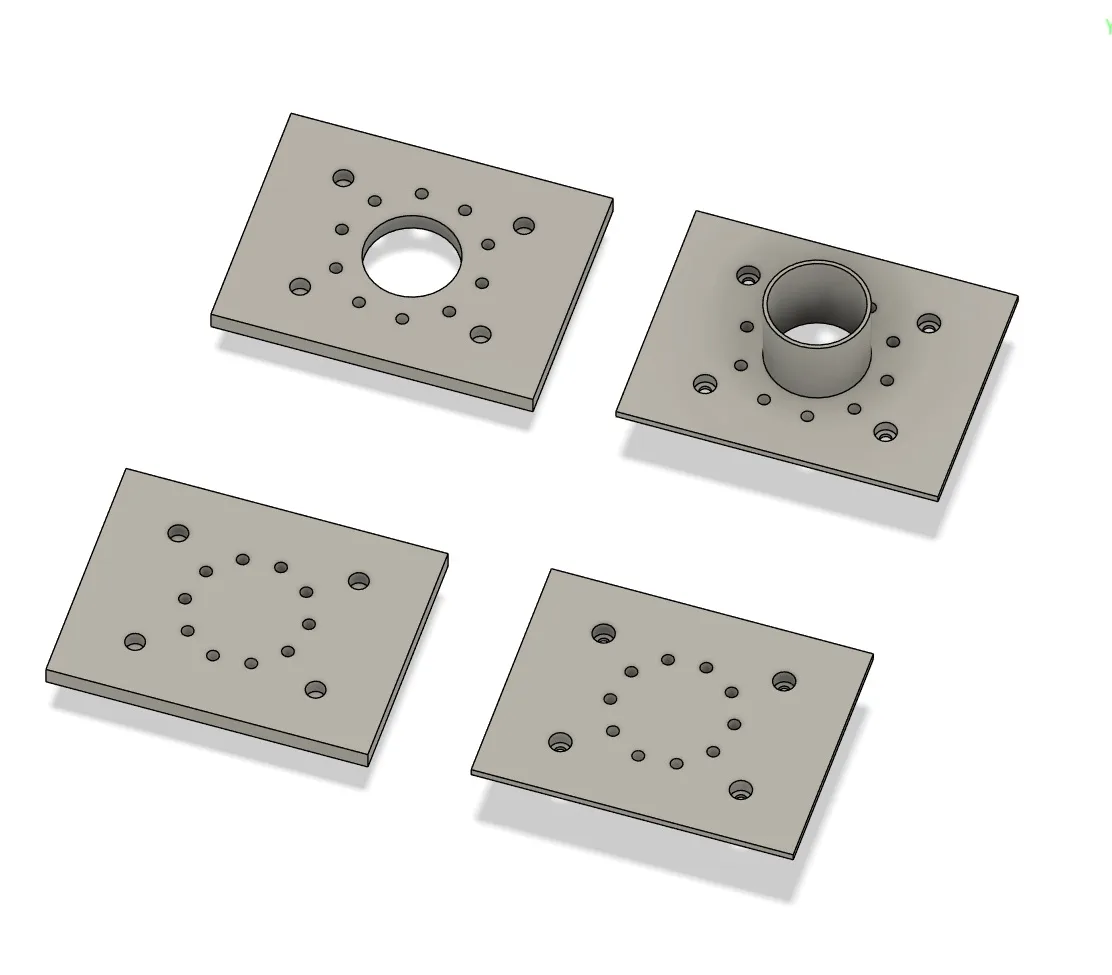
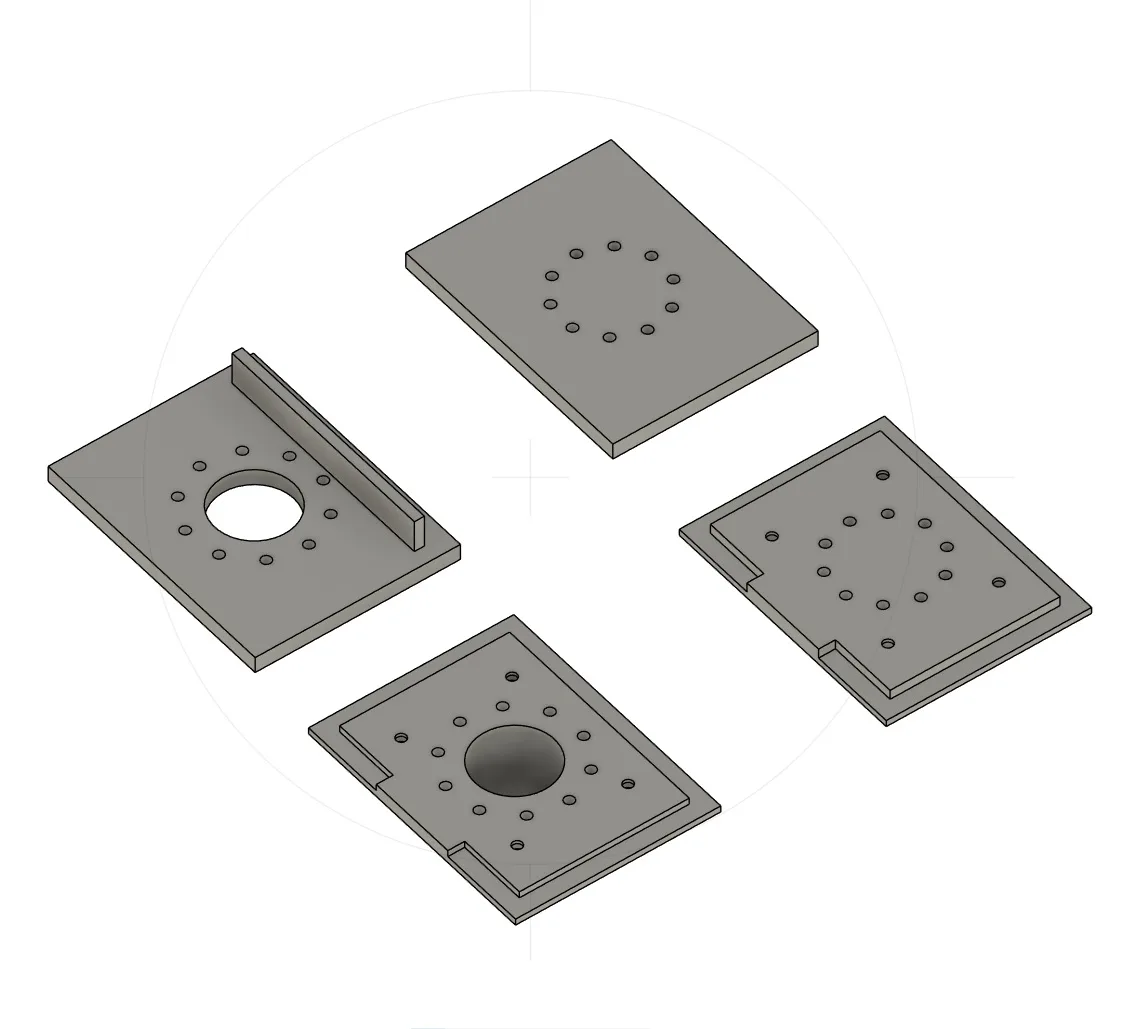
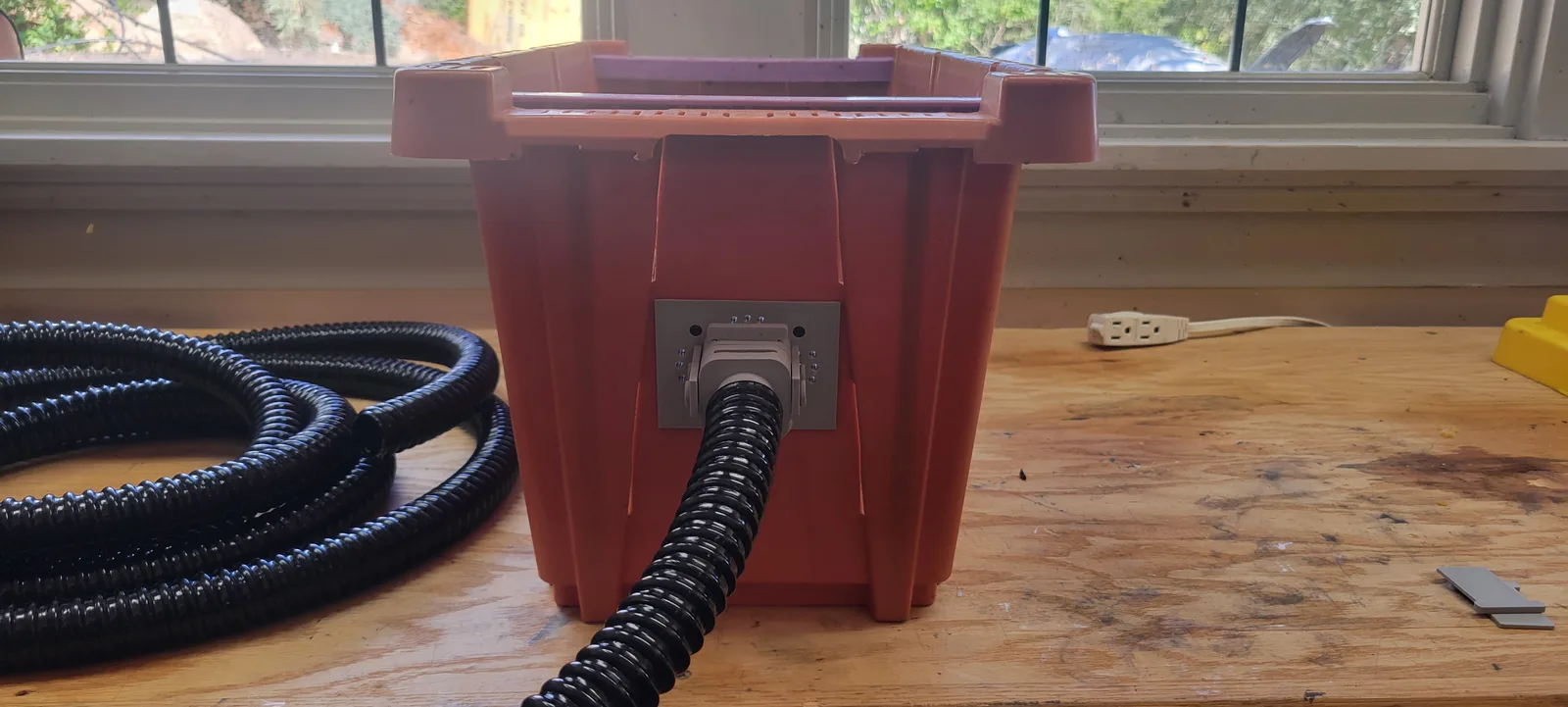
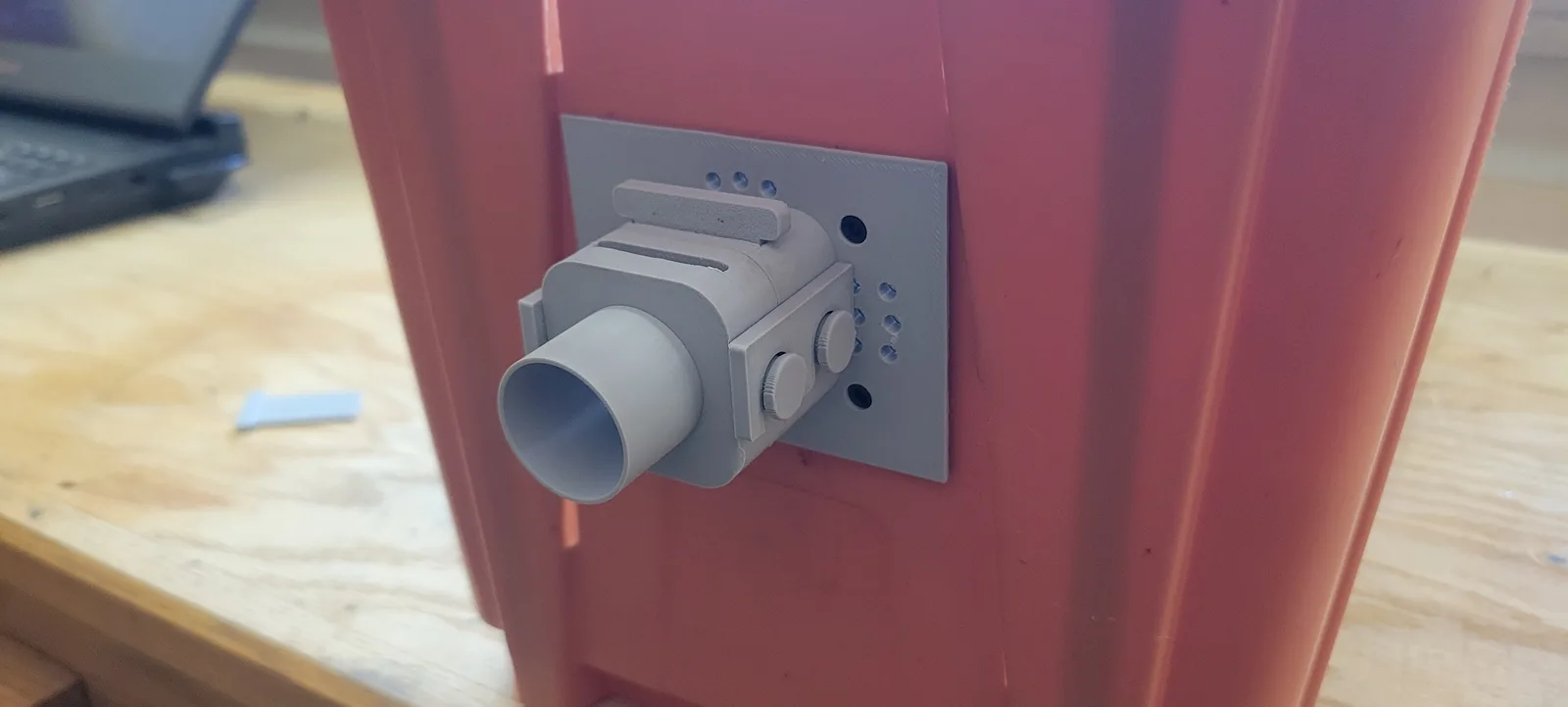
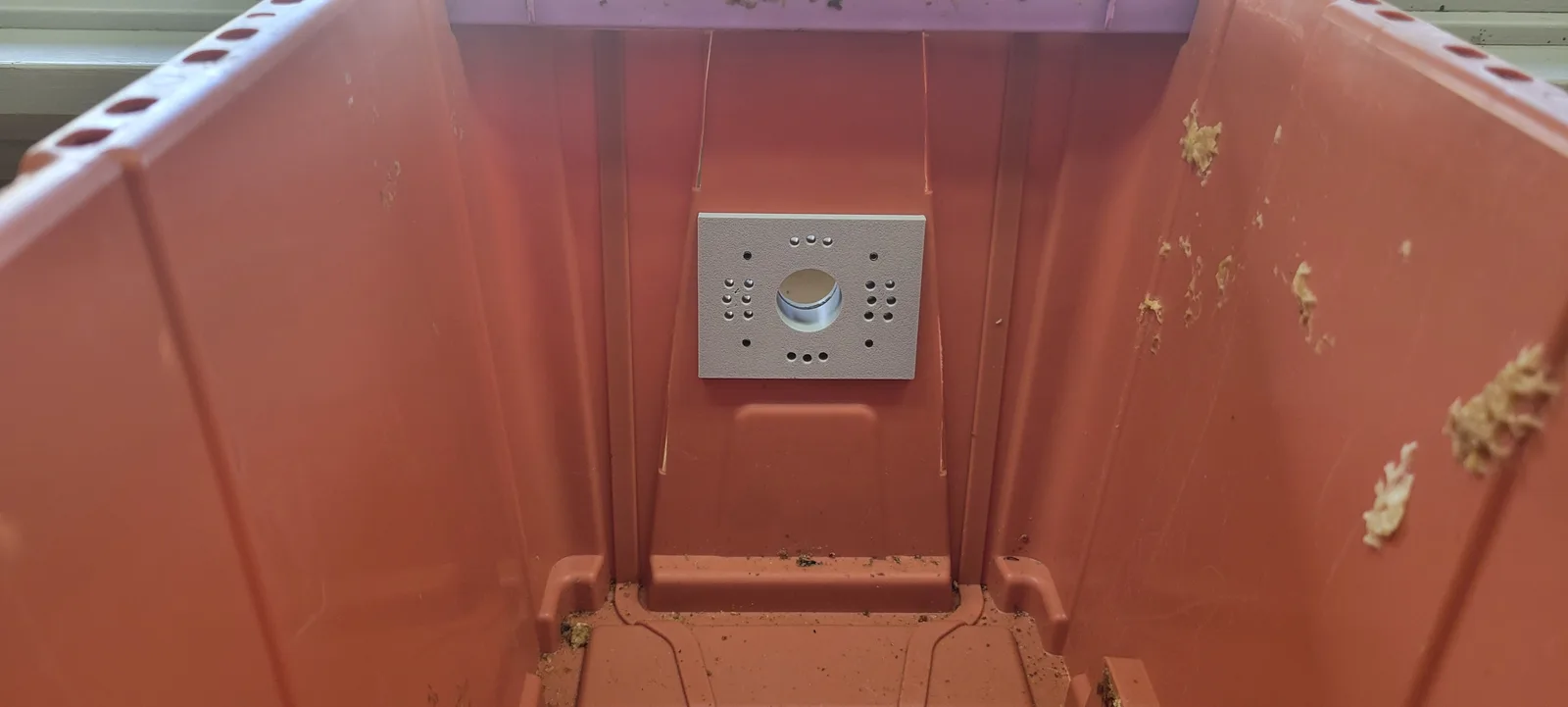
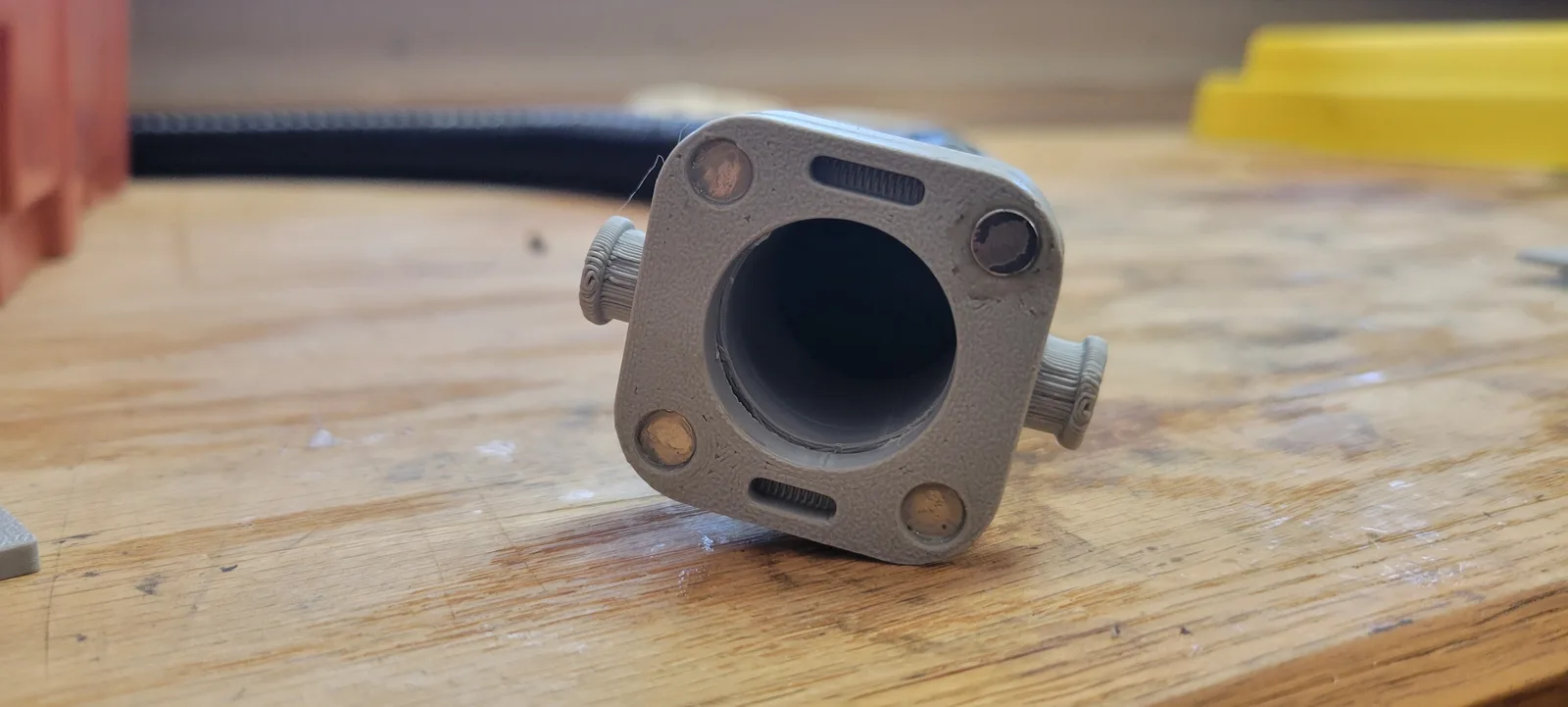
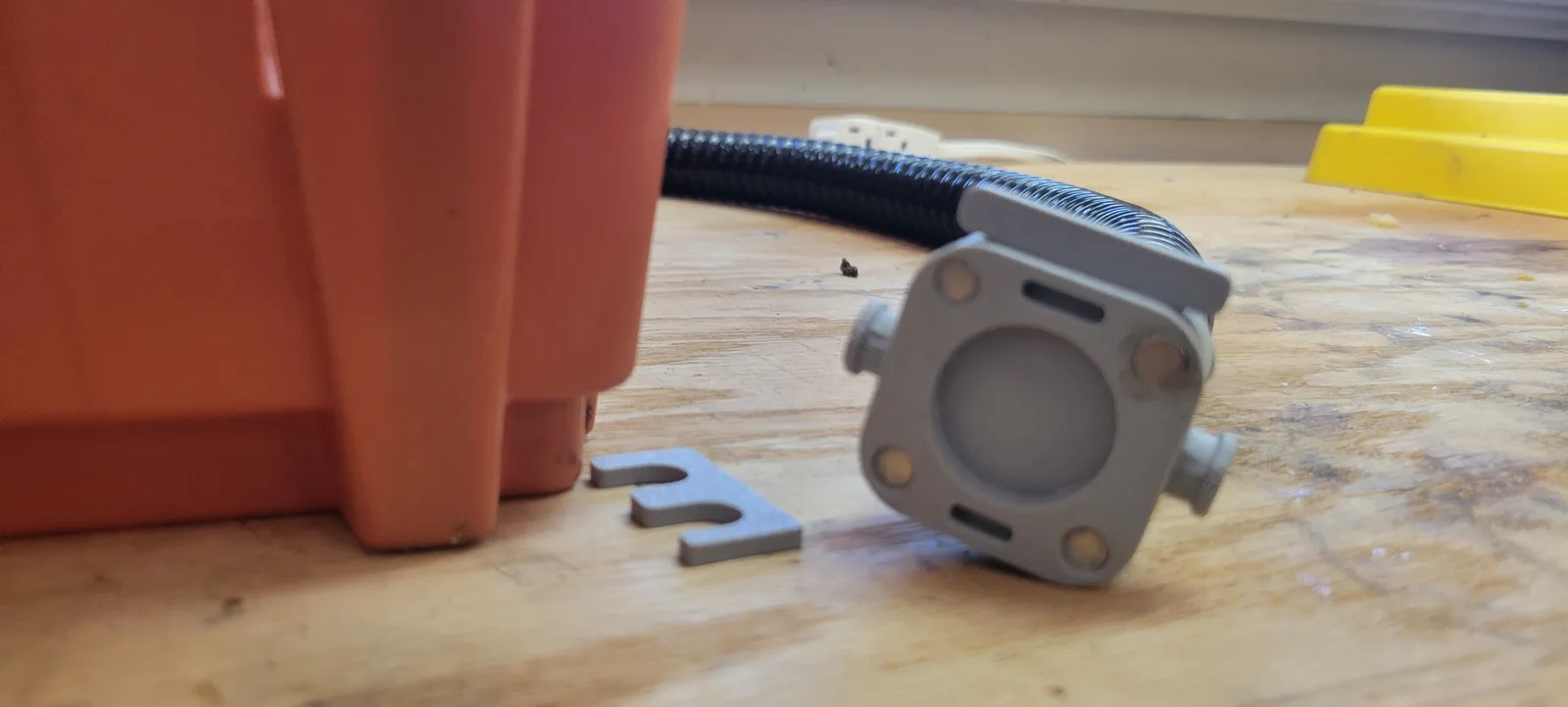
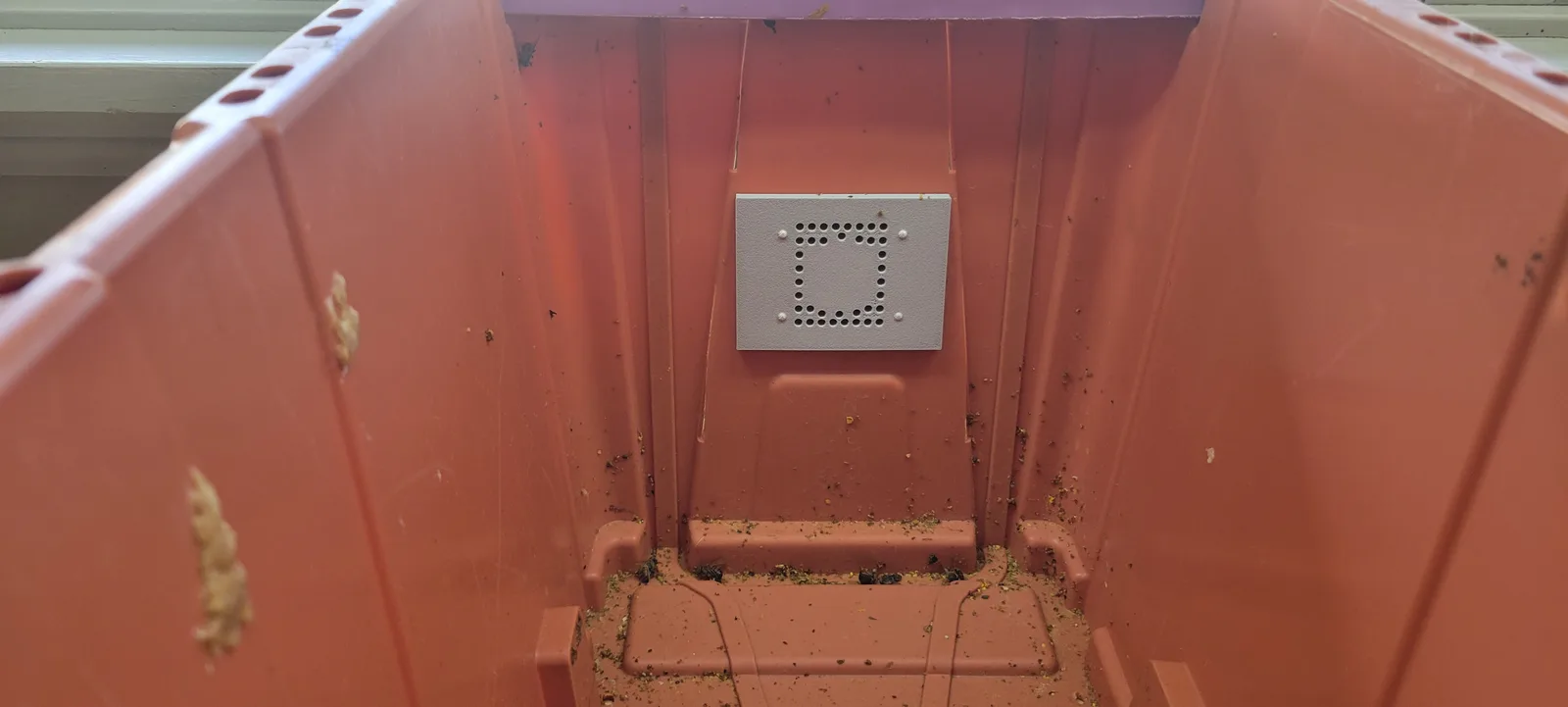
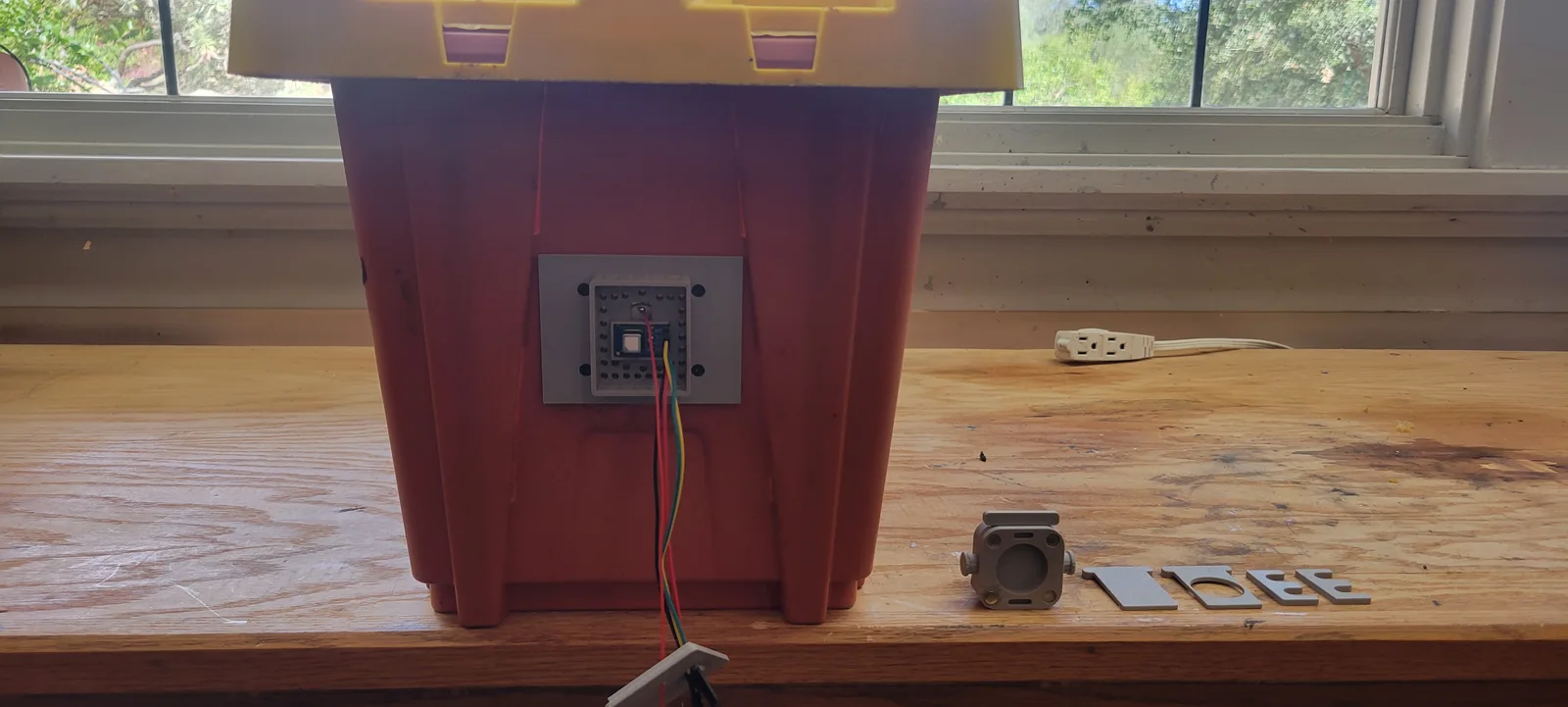
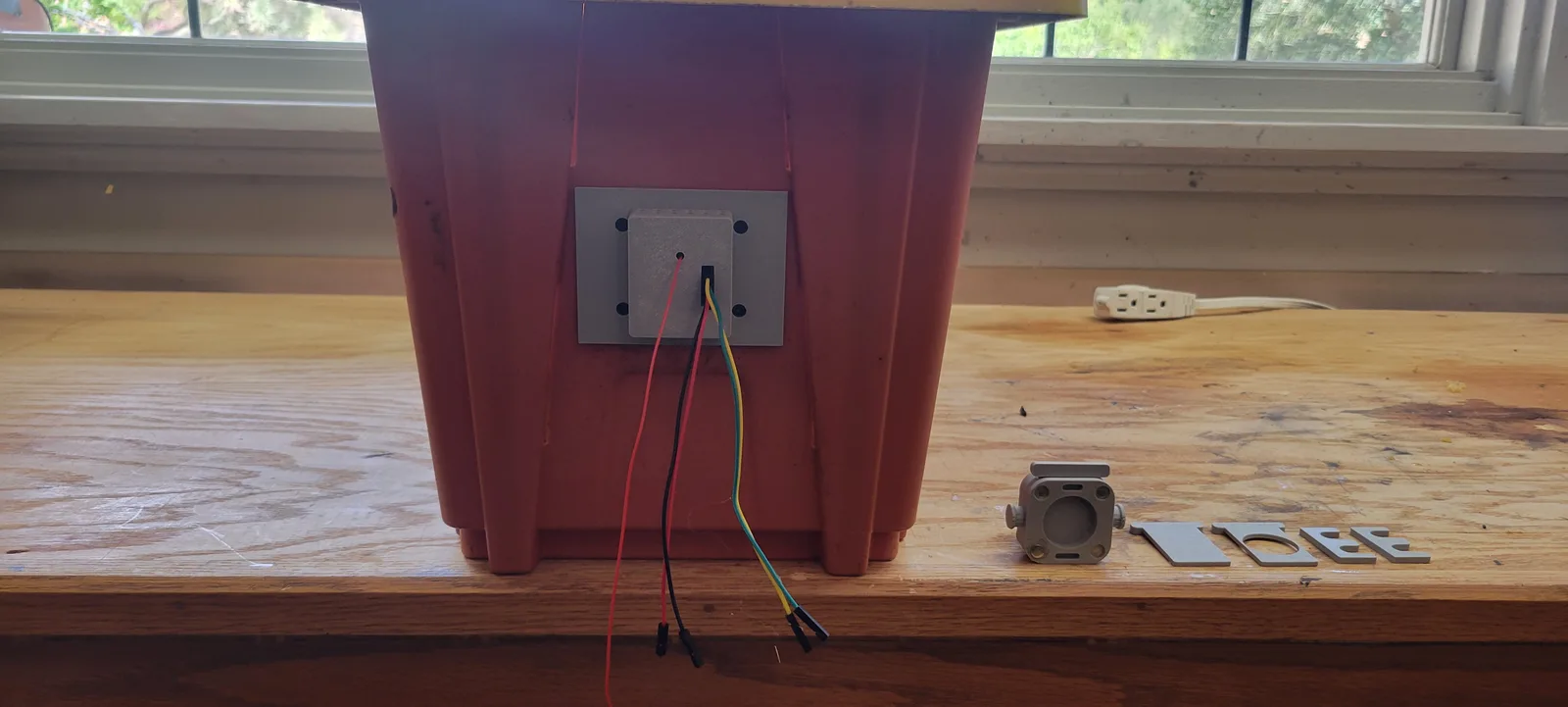
The run will be about three feet. Twenty feet came on the roll but that is stock, not a design choice. The tube only has to do three things: be wide enough for trails both ways and still narrow enough to guard, be short enough that it does not sag or become somewhere to leave a dead bee, and be ribbed, because they walk it rather than fly it.
The part that is easy to get backwards
The second adapter is a blank. It closes the nuc's other opening, and it opens into the room, on purpose. Venting it outside would be the natural thing to do and it would break the whole design.
The colony gets exactly one opening to the outside world, and everything it breathes out goes the other way, into the garage.
That is the variable. The tube is not. A robber does not find a colony by pacing along a wall. It finds one by smell, and then by the cues at the opening: a plume of hive air, traffic in a pattern it recognises, a landing board, stores on the bees coming and going. Vent indoors and the outside end of the tube has none of that. It is a one inch hole in a window with nothing behind it.
Three feet of hose is not a compromise here, it is what makes the result readable. A long tube would have mixed vent direction up with distance and I would never know which one did the work.
What goes in on Sunday
The queen from one of my Toro colonies on the frame she is on, a shake of her own nurse bees, a frame of pollen and honey out of the freezer, and empty comb.
Sunday is not arbitrary. The new queens land Tuesday and a hive has to be queenless about forty eight hours before you introduce one, so she comes out Sunday morning either way. The only question is whether she goes in a jar or in a box.
What I expect to go wrong
Writing this down now, because a prediction made afterwards is just a description.
Bees in the room, and the window makes it worse. Anything loose in the garage flies to the brightest thing, which is the window the tube goes through, and lands on the glass inches from a way out it cannot use. That is the running cost of keeping a colony indoors and I intend to count it.
The tube. Undertakers will drop corpses in it. Three feet is short enough to see through and clear, which is one thing the short run buys outright.
The move at the end. Every forager will be oriented to a hole in a garage wall. Set the box down in the apiary and they fly back to the wall.
What this is not
It is not a test of robbing resistance. A colony that was never in the yard has not resisted anything, and I will keep saying that, because the two get confused and the confusion flatters the result. What it tests is whether the vulnerable window can be moved off site, which is a logistics answer and not a genetics one.
There is no control either, so growth on its own will not prove the garage caused it. I am recording the numbers anyway: frames of bees and frames of brood at day fourteen and day twenty eight, and any robbing at the tube mouth with the date.
Success, decided in advance so I cannot move it later. At day twenty eight the nuc has more bees and more brood than it went in with, nothing has tried to rob the tube mouth, and the tube has stayed passable on its own. Anything less than all three is a partial result and I will report it as one.
Update, 3 September 2026
The colony went in on 31 August and has been running through the wall since. There is a live camera on the entrance, running continuously.
What has happened so far. The bees found the tunnel on the day it was connected and were using the landing ledge within hours. They treat it as an ordinary hive: orientation flights at the mouth, pollen coming in, syrup taken. Nothing has tried to rob the tube.
One thing has already gone against the design, and it is the interesting one. The whole premise is that the colony vents indoors and the outside end of the tube has nothing behind it. On the first day they chose to move their air out through the tunnel instead. If that holds, the mouth is not the anonymous hole this design assumes, and any result rests on geometry and guards rather than on the absence of smell.
So it is now measured rather than argued. Version two of the adapters carries a CO2 sensor in the rear plug and a second behind the tunnel mouth. CO2 is the cheapest honest marker of hive air there is, so the difference between the two says which way the colony is actually moving its air, continuously, instead of me watching for fanners at dusk. There is a piezo contact microphone in the rear plug as well. The hardware and the reasoning are in Print the nuc tunnel adapters yourself, and the files are free.
No data yet. The sensors are fitted but not calibrated in place, and nothing has logged a full day.
Day twenty eight is 28 September. The success criteria above have not moved and will not.
Update, 13 September 2026
Day thirteen. Both sensors are calibrated, side by side in outside air within the same minute, and logging continuously. Which means the central claim in this post has been measured, and it is wrong.
The premise was that the colony vents indoors, so the outside end of the tube has nothing behind it. It has plenty behind it. The tunnel mouth runs into the thousands of parts per million, repeatedly, every day. On 3 September that was a suspicion from watching the bees. It is now a measurement.
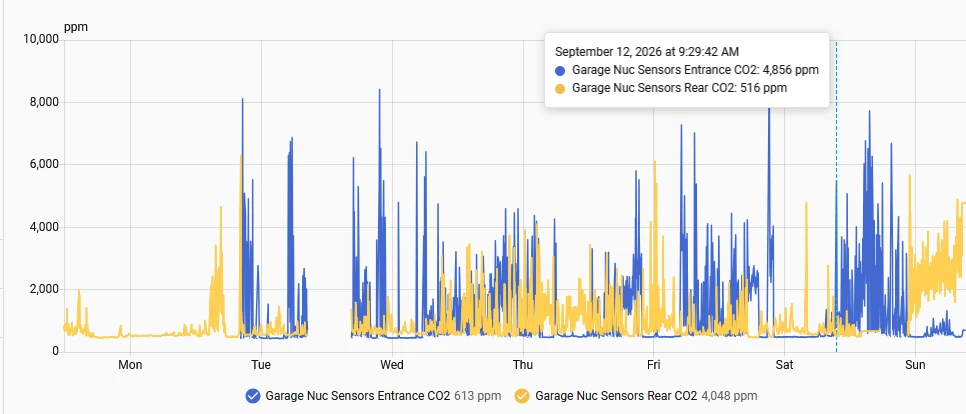
Both ends carry hive air, and the tunnel carries the biggest loads. Its tallest peaks run to about 8,100, 8,400 and 8,900 against roughly 6,100 at the rear. Whatever else this box is doing, it is not a one inch hole in a window with nothing behind it.
One instant makes the point better than the week does. At 9:29 on the morning of 12 September the tunnel mouth read 4,856 ppm and the rear vent read 516, which is room air. At that moment the colony was pushing everything it had out of the hole I designed to be anonymous, and the vent built to take that load was doing nothing at all.
The shapes are different and that is the part worth looking at. The tunnel produces tall, narrow transients that fall straight back to baseline. The rear produces broader raised bands that sit up for longer at a lower level. Both ends return to about the same 500 to 600 ppm floor between events, so neither vents continuously. That reads like the tunnel being flushed in bursts while the rear leaks slowly, though a week of traces is not enough to say so with any confidence.
What I can say is that the burst pattern tracks the bees rather than the weather. On an overcast day with the mouth quiet, CO2 rose while temperature stayed flat, so the colony was producing the same amount and clearing less of it.
The claim I wanted to make here, and cannot yet. I believe the rear runs higher than the tunnel in the small hours, when there is no traffic at the mouth, no wind on the building and no temperature difference across the wall. That is the design working as drawn, and if it holds it says the whole effect is driven by bee traffic rather than by the geometry. A week squashed onto one axis cannot resolve it. It needs a single undisturbed night plotted on its own and it will get one.
Something was validated, and it is not the thing that was under test. The colony has been fed sugar syrup continuously for over a week, indoors, in the middle of a dearth, with no interest from anything. In the yard that would have started something within the hour. That was never the claim being made here, which makes it a discovery rather than a confirmation, and for anyone else reading it is probably the most useful line in this post.
And one thing is eliminated without being replaced. Nothing has tried to rob the tube mouth. Scent concealment can no longer be the reason, because there is no concealment. What remains is defensibility, or a single small opening three feet off the ground, or the absence of the visual cues a robber actually uses, or simply not having been found yet. I cannot separate those with this build and I am not going to pretend otherwise.
Then the ants found it, and that is a result about this design rather than an interruption to it. I left frames out of the freezer on the garage floor overnight. Ants found those, and having found those they found the tunnel mouth and started working their way in. The only thing to do at one in the morning was shut the entrance, which on a box with exactly one opening means sealing the colony in completely.
One opening is the strength of this design and it is also the whole of its risk. There is one place to defend, which is why nothing has robbed it. There is also one place to lose, and closing it leaves the colony no way out at all.
The accidental part is the useful part, and it is the right hand end of the chart above. With the tunnel shut, the rear vent carried the entire colony on its own overnight and held it around 4,000 ppm. That is elevated and it is nowhere near a problem for bees, which tolerate several times it. It also answers a question I could not have asked deliberately without shutting a colony in on purpose: the rear vent is neither blocked nor undersized. It is simply not needed while the tunnel is open. The two traces swapping places at that point is the clearest thing on the chart, and I did not design the experiment that produced it.
The colony is fine. Inspected the day before: eggs on every frame that had emerged, and on the new frames as well.
One more thing the ants taught me, and it is why the chart above stops. They were climbing the sensor cables. Any wire running into the box is a bridge, and it goes around everything you have done at the legs and the stand. The cables came out to break the trail, which is also the end of the data. They go back in with a sticky barrier on the run itself, not just on the furniture.
A note that cost me a day. The brood nest probe read 42°C pushed into the comb and I could not explain it. Moved a few centimetres into the air above the frames, same probe, minutes later, it read 32°C. A metal probe among bees reads whatever is touching it, and what was touching it was the thorax of a heater bee. Contact temperature and nest air temperature are two different measurements and the probe does not tell you which one you asked for.
The colony is fine. Two frames of brood, four of the five frames fully drawn, new comb going onto foundation, pollen and honey stored at the top. It has since moved into the version two box with the quick connect hose and the new entrance. It is close to four frames of bees in a five frame nuc.
Day twenty eight is 28 September. The success criteria at the top of this post have not moved and will not. The entrance camera is live until then, so anyone who wants to check the traffic claims against the traffic can.
Still not validated. Running, not finished. The numbers come at day twenty eight. The premise is already falsified, which is a result rather than a failure, and it is why the sensors went in.